Your company's records are worth money to AI developers.
AI companies pay for de-identified copies of real business records, like emails, call transcripts, CRM notes and invoices. The buyer we work with publishes a range of $100K to $5M per qualifying company. We help you find out if yours qualifies and stay with you through the sale, and your original records never leave your systems.
Free to check. No passwords handed over. Nothing is exported until you sign off.
SIFTR earns a referral fee from the buyer. How we're paid
$100K to $5M
The buyer's published payout range per company
6 kinds of records
Email, documents, chat, calls, CRM and billing
Your sign-off first
Systems, dates and price agreed in writing before any export
The records you already have are the product
AI models learned to write from the public internet. What they never saw is how a business actually runs: how a rep handles a price objection, how a dispatcher reshuffles a day, how an office chases a late invoice. That history lives in your systems, and it's what buyers pay for.
Email and calendar
How your team works with customers, vendors and each other.
Documents and files
Proposals, SOPs, contracts and training material.
Chat
Slack or Teams threads where problems get worked out.
Calls and transcripts
Recorded sales calls, support calls and meetings.
CRM and sales
Pipelines, notes, follow-ups, wins and losses.
Billing and operations
Invoices, payments, jobs and work orders.
The buyer looks for standard tools: Google Workspace or Microsoft 365, Slack or Teams, Jira and a CRM. You and the buyer agree on which systems and date ranges are included before anything is exported.
They want how the work got done, not who it was for
AI developers are building software that can do office work. Your records teach it how that work gets done. Your client list doesn't help them, which is why names come out before anything is delivered.
What buyers pay for
- How a decision got made
- The steps from request to result
- Judgment calls under a deadline or a budget
- How mistakes got caught and fixed
- What actually worked
What they don't want
- Your customers' names, emails or phone numbers
- Client and company names
- Your pricing and deal terms
- Passwords and logins
- Anything outside the scope you approve
What one record looks like before and after
The useful part, how the work got done, stays. Anything that points to a real person or a real dollar amount gets swapped out.
In your CRM
Maria Lopez called from (602) 555-0142 about the $4,800 service plan quote. Wants $200 off and a Saturday install.
Derek checked the schedule. Saturday is full, so he offered a free install on Tuesday instead.
Maria booked Tuesday at 9 AM. Derek sent the confirmation from derek@example.com. Closed in 2 days.
What the buyer gets
[Customer_1] called from [Phone_1] about the [Amount_1] service plan quote. Wants [Amount_2] off and a Saturday install.
[Rep_1] checked the schedule. Saturday is full, so he offered a free install on Tuesday instead.
[Customer_1] booked Tuesday at 9 AM. [Rep_1] sent the confirmation from [Email_1]. Closed in 2 days.
Kept: the objection, the counteroffer, the outcome and how long it took.
Swapped out: names, phone numbers, emails and dollar amounts.
Fictional example to show the idea. The real process is described below.
Is your company a fit?
The buyer sets the requirements. Here's what it looks for, and when we'd tell you to hold off.
What the buyer looks for
- Based in the U.S., Canada, the U.K. or Australia.
- Several years of digital records, and clear rights to them.
- 20 or more office staff. Legal and accounting firms can qualify with fewer.
- Work that runs on standard tools: Google Workspace or Microsoft 365, Slack or Teams, a CRM.
Industries in highest demand right now: software and IT, legal and professional services, finance and accounting, sales and account management, operations and logistics, and customer support. Others are considered case by case.
When we'd tell you not to sell
- Your privacy policy or customer contracts promise you won't share customer data. Fix that first, or don't sell.
- You're in the middle of selling the company. An exclusive data deal can complicate due diligence.
- Your records are patient files, client legal files or tax returns, and your attorney hasn't signed off. Those come with their own rules.
- Most of your history sits in a system you can't export from. No export, no deal.
What makes your records worth more
The buyer prices each company on four things.
01
Volume and history
Years of records and the number of people who created them. A longer history is worth more than a short one.
02
Records that connect
The ticket, the chat about it, the fix and the result, all describing the same piece of work.
03
Industry demand
Work that AI developers are buying right now, like support, finance, sales and operations.
04
Quality
Complete, consistent, well-organized archives that export cleanly.
There's no calculator here on purpose. Even the buyer labels its own estimator "indicative only," and we'd rather you see a real offer than a number that sets the wrong expectation.
Your originals stay with you
You sell a cleaned copy of what you choose. Here's how the buyer handles it.
Originals stay with you
You keep your original records and systems. Only a copy is licensed.
No passwords handed over
Your own team signs in to the systems you approve.
Only the agreed copy
Just the systems and date ranges in your signed scope get exported.
Identifiers swapped out
Sensitive material is removed, and identifiers like names, emails and phone numbers are replaced before delivery.
Checked before delivery
The buyer filters and reviews the cleaned copy before it goes to any AI developer.
Nothing published
Your records aren't published or sold as a report about your company. Buyers use the copy for AI research and training.
SIFTR is the referral partner, not the buyer. The buyer handles the export and the cleanup with your team.
From first form to payment
Five steps, and nothing is exported until you sign.
- 1
You
Tell us about your company
The short form at the bottom of this page. About 10 minutes, and no records needed.
- 2
SIFTR
We check the fit
Michael or Anthony looks at your systems and history, tells you straight whether it's worth pursuing, and if it is, gets you started with the buyer.
- 3
The buyer
You get an estimated range
The buyer reviews your rights, tools, headcount and years of history. Next comes a 14-day nonbinding letter of intent, so you can still walk away.
- 4
You
Approve the scope in writing
Price, payment schedule, systems, date ranges and any exclusivity, all agreed before a single record moves.
- 5
Your team and the buyer
Export, clean up, get paid
Your team signs in to the approved systems, and the buyer exports, de-identifies and delivers the copy. You're paid 30 days after the AI developer accepts the data.

What you get by going through us
- We build AI and CRM systems for growing businesses every day, so we know what's inside a CRM, an inbox or an accounting system and what's worth including.
- A straight answer on whether it's worth doing, including when it isn't.
- Help reading the offer: exclusivity, use limits and payment terms. We're not lawyers, so your attorney should still review the agreement.
- One person to call from the first form to the day you're paid.
How we're paid
The buyer pays SIFTR a referral fee for companies we introduce. You don't pay SIFTR anything, and the buyer doesn't charge sellers a broker fee.
 Who you'll talk to
The straight-answer promise
If your company's records are worth selling, you'll hear that, with the reasons. If they aren't, or the timing is wrong, you'll hear that too, plainly. Either way, you'll know exactly where you stand before anything is signed.
Michael Maness, Data Specialist, SIFTR Data BrokerageTakes the first call with every company that applies
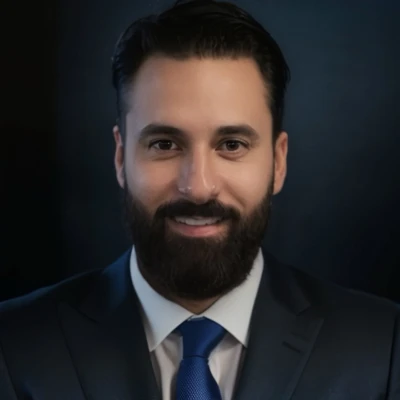
Anthony Ricciardo · Founder, SIFTR
Anthony is a U.S. Navy veteran and founder of SIFTR, a Las Vegas based software and automation company that helps growing businesses use AI, CRM systems and custom technology to solve real operational problems faster.
Questions owners ask
Do we give up ownership of our data?+
Can we choose which systems and dates are included?+
Do we have to change how we work?+
Who actually buys the data?+
Will our records be made public?+
How is the price set?+
How does SIFTR get paid?+
How long does it take?+
Is this legal? What about our customers' privacy?+
We're a medical, legal or accounting practice. Can we sell?+

See if your company qualifies
Answer two quick questions, then pick a time to talk with one of our Data Specialists.